

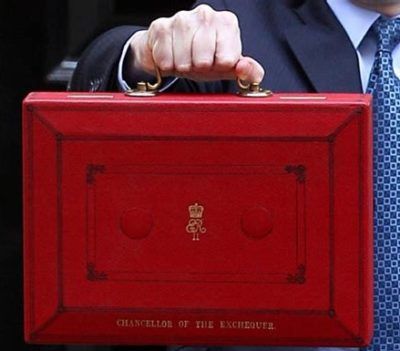
The Chancellor told MPs the 28 October Budget was a ‘breathing space’ for households and business, but the Treasury Committee pressed him on a market-moving leak, thin fiscal headroom and a growth plan the OBR did not score.
A leak that rattled the Treasury
The Committee opened with the leak of Budget information, before turning to the Budget itself. Chair Dame Meg Hillier said Bloomberg had known on Budget day that the bank tax rise would be temporary and below 8%. The story ran at 10:45, hours before the Chancellor stood up.
Permanent Secretary James Bowler called the leak ‘deeply regrettable and frustrating’. He said it did not compare with last year’s, when the OBR’s forecast was published early. Asked whether it could be coincidence, he replied: ‘I think that’s unlucky.’ He accepted that markets ‘moved a little bit’ on the news.
John Healey said he was ‘dismayed that it happened at all’. He has asked the Cabinet Office’s Government Security Group to investigate, and promised to share the findings with the Committee. He described the controls this year as ‘national security style’, including digital security, signed undertakings and automatic watermarking of documents. He did not rule out that the leaker may never be found: ‘I don’t know. I would certainly hope so.’
He said he had met bank leaders before the Budget but that a temporary bank surcharge was not discussed. The Treasury has also written to the Financial Conduct Authority and will share its findings with the regulator.
Growth and living standards under challenge
On the economy, Healey cast the Budget as a response to what he called ‘global economic storms’. He said the conflict in the Middle East was driving up energy and borrowing costs, and that ending it ‘would be the single best economic policy for Britain’. Committee members pointed out that none of the Budget’s 98 measures was scored by the OBR as moving growth. Healey said he was not worried, arguing that enterprise, devolution, energy and AI measures would feed through over the next year or two. He noted that Britain had beaten growth forecasts this year and said he aimed to do so again.
The Chancellor’s new founders’ relief drew the sharpest scrutiny. Members cited the IFS’s Helen Miller, who has been highly critical of it for creating distortions and cliff edges. Healey said he respected her but gave more weight to the Startup Coalition, and confirmed that detailed design would be worked out by the end of this month for the Finance Bill. A 10% capital gains tax rate on up to £10 million of lifetime gains was put to him, and he rejected the suggestion that it would encourage founders to sell up rather than grow. Treasury director Dharmesh Nayee said the gap it fills is that Britain is good at starting firms but weaker at scaling them.
Lib Dem Bobby Dean put the Resolution Foundation’s verdict to him: living standards set for their worst decade on record. Healey did not accept that the Budget did nothing, pointing to the £100 household energy payment, the electricity VAT cut and the extended 5p fuel duty cut. On frozen income tax thresholds, which Dean said are equivalent to adding about 2% to income tax, Healey said the decision pre-dated his Budget. He accepted that the freeze is ‘there in the analysis’ of its effect on incomes, but added that it is ‘there in the numbers just how expensive it is to change it’.
Headroom and the spending review
Members repeatedly challenged the size of the Chancellor’s fiscal buffer. Headroom against the fiscal rules has fallen to £15 billion in the target year, from £22 billion in the previous Budget as MPs put it (Healey recalled ‘over 26’). Healey said he had rebuilt it to over £20 billion in 2030-31, the year the next Budget will target, summing up his approach as ‘use it when you need it, rebuild it when you can’. Conservative MP John Glen noted that the average since 2010 is around £30 billion. Healey replied that this is ‘not a maths question’ but ‘a judgment question’. The OBR attributed a £14 billion rise in debt interest costs since spring to the Middle East conflict.
A second worry was spending. With defence set to rise to 3% of GDP, the Committee said, unprotected departments face real-terms cuts of around 2.6% a year in the final three years of the forecast. Healey gave no figures. He said the spending review will come next year, that departments start from a base £40 billion higher on day-to-day spending and £120 billion higher on investment than in 2024, and that it will be ‘jointly run between Number 10 and Number 11’. Asked where the buck stops, he said: ‘Ultimately, the buck must stop with me.’ He added that he could not commit Downing Street to appear before the Committee, but said he would pass the request on. ‘If no one else, I’ll be here.’
The Budget also promised a ring-fenced preventative spending fund in the review, with homelessness, violence against women and girls, and youth unemployment as candidate areas. He admitted it is too early to say how big it will be or how it will be audited, and set the Treasury ‘homework’. On whether the review will come with tax changes, he would say only that such decisions would be taken during next year.
Welfare, energy support and defence
Welfare spending has risen by £5 billion since the OBR’s last forecast, and MPs said the OBR warns of a further £25 billion of pressure if nothing changes. Healey pointed to reviews by Alan Milburn on youth unemployment, due next week, and Stephen Timms on the benefits system, due before Christmas. He promised a government response to Milburn straight away, a welfare white paper early in the new year, ‘more likely February than January’, and legislation next year. He called the current system ‘broken’.
The £100 household energy payment, due in January for around 20 million households in England, was tested hard. Healey said it is direct, quick and reaches nine in ten of the poorest households. Dean said one in eight households in the poorer half would miss out entirely while half of the richest tenth would receive it, calling that ‘not a properly targeted scheme’. Healey stood by his judgment. Permanent Secretary James Bowler said linking the welfare and tax systems is ‘a big prize’ for better targeting in future. MPs also pressed on off-grid households, and Healey agreed to follow up in writing on whether councils have yet distributed earlier support.
On defence, Healey said the 3% of GDP target for 2030 is a waypoint to NATO’s 3.5% commitment for 2035, and that the Defence Investment Plan is now fully funded for the first time. He said all departments must contribute capital, including health, and that he could not guarantee which hospital schemes might be affected. A new joint Treasury and MoD taskforce will look at innovative and private funding, and treaty talks have begun on a multinational defence bank. Healey said much of the National Wealth Fund and British Business Bank defence investment ‘is likely to score’ towards NATO’s target, but that it depends on what is spent.
On the EU, he declined to set red lines on any payment into an EU budget ahead of next week’s summit, saying only that the benefits of a deal must outweigh the costs.
Devolution, tax detail and HMRC powers
Healey predicted that ‘in five years’ time people will look back’ on the Budget’s fiscal devolution as ‘a very significant move’. He conceded that the Treasury has made no aggregate estimate of its growth effect and that, as the OBR told the Committee, cause and effect will be hard to measure. He pointed to £150 million for capacity building in strategic authorities, local accounting officers answerable to local scrutiny committees, and a forthcoming ‘rewiring the state’ white paper. Asked about replacing business rates, he said that Labour commitment still stands and he would like to see it in the 10-year plan.
On business, he said he is taking around 70,000 high street firms out of business rates for two years, funded by levies on banks, big online sellers, gambling and vape shops. Dharmesh Nayee defended slower write-downs on second-hand assets, noting that first-year relief on new investment rises from 40% to 50%. On HMRC’s new powers to take money directly from bank accounts, Conservative Dame Harriett Baldwin warned that people in their 90s in care homes could receive self-assessment forms for the first time. Healey said such cases should be raised with him directly and that the pensioner tax allowance exists to keep many pensioners out of the system. He rejected the charge that bringing forward tax payments is an ‘accounting trick’.
The session ran about two hours and fifteen minutes excluding votes. The Committee asked for written follow-up on founders’ relief consultation, off-grid energy support and the leak investigation.