

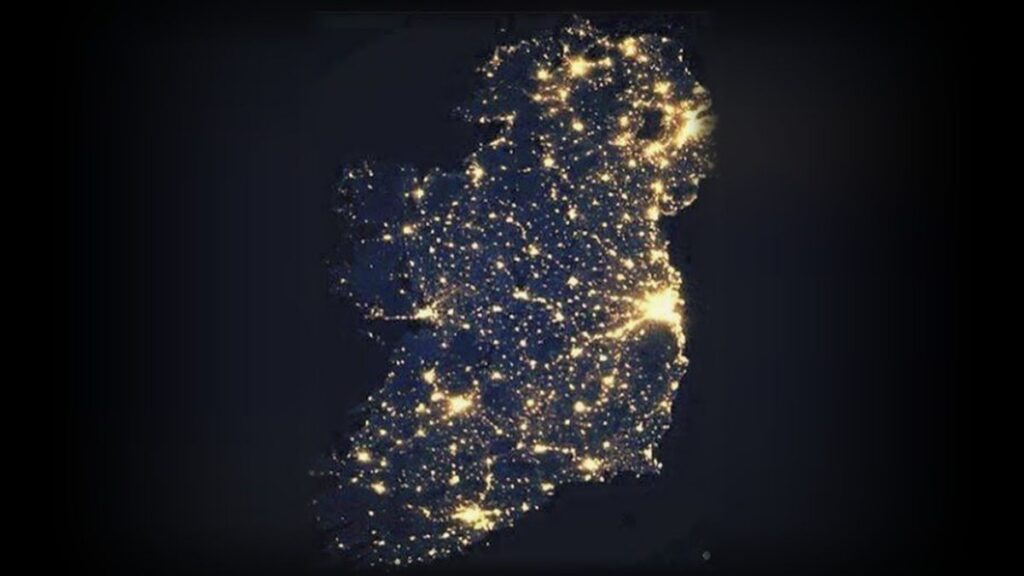
An Taoiseach, Micheál Martin, has proposed an independent research initiative to examine Ireland’s constitutional future, including a united republic established within five years of a unification referendum, as political pressure grows on Dublin to prepare for a possible change in northern Ireland’s status.
The proposed Futures Study Initiative would assess three scenarios without recommending a preferred outcome: a single republic governed principally from Dublin; an all-island state retaining devolved government in Northern Ireland; and continued co-operation without constitutional change. The five-year transition belongs to the first scenario, rather than constituting a government deadline for reunification.
The Taoiseach outlined the proposal to his Fianna Fáil parliamentary party on Tuesday. It comes as Simon Harris, deputy premier and Fine Gael leader, prepares a promised unity “blueprint”, while opposition parties press the government to undertake more detailed preparations.
Martin’s approach seeks to distinguish research from advocacy. The initiative would identify established knowledge, disputed findings and gaps requiring further investigation, rather than draw up a single constitutional settlement. Its name would deliberately omit “Irish unity” to avoid appearing to prejudge its conclusions.
Economics and public services
The proposed body would examine six areas: constitutional and legal change, the economy, health, education, security and culture. An independent chairperson and at least five other members would oversee the research, drawing on submissions from political parties and activist groups.
The economic brief would extend beyond the immediate costs of institutional change. According to the document reported by the Press Association, “broad fiscal and economic convergence” should underpin policy under any scenario, with medium- and long-term effects defined and costed. Maximising welfare across the island would be a guiding assumption.
That framework places public services and living standards alongside questions of sovereignty. Comparing health and education systems, for example, would require the initiative to examine what convergence entails in practice, rather than treating constitutional change as an administrative exercise. These are questions the research is intended to investigate, not benefits or costs it has already established.
The proposal does not settle the fiscal consequences of unity. Instead, it creates a process for identifying where evidence is missing or contested — a distinction likely to matter in a debate where competing constitutional preferences can shape economic assumptions.
Consent and identity
Any constitutional change would remain governed by the Good Friday Agreement’s principle of consent. The agreement requires democratic agreement in both parts of the island for unification. The decision to call a Northern Ireland border poll rests with the UK’s Northern Ireland secretary, who must do so if a majority for unity appears likely. Dublin’s research proposal does not alter that framework.
Martin has also stressed that a substantial section of Northern Ireland’s population would retain a British identity, which must be respected. Under the unitary-state scenario, minority and identity guarantees would continue, although Northern Ireland’s devolved government would not. The alternative all-island model would preserve devolution along lines similar to the existing settlement.
Participation beyond nationalism is central to the proposal’s stated purpose. The briefing warns against repeating initiatives in which “one side” talks to itself and reinforces division. Whether the process secures that broader participation will be an important test of its ambition to provide a common evidence base.
Reform before constitutional change
Martin’s briefing also supports discussions on reforming Stormont’s institutions, involving Northern Ireland’s parties and both governments. It argues that protections for different communities should not become instruments for blocking wider progress, citing the repeated collapse of devolved government as an obstacle to planning and public-service delivery.
Alongside constitutional research, the government intends to continue its Shared Island Initiative. The briefing says more than €1bn has been allocated from its €2bn fund, maintaining practical North-South investment regardless of any future sovereignty decision.
The proposal therefore places three tasks alongside one another: improving existing government, expanding cross-border co-operation and examining constitutional alternatives. Its immediate significance lies not in making reunification imminent, but in seeking to establish what voters would need to know before choosing it