

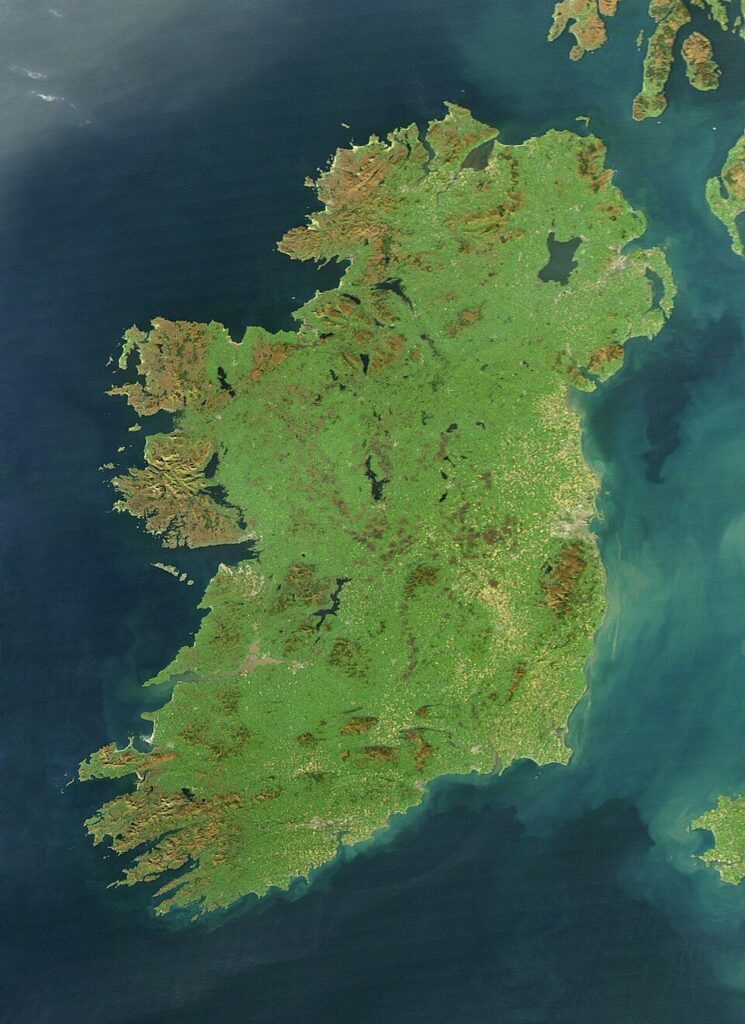
Former Prime Minister Gordon Brown has stated that a united Ireland is inevitable in the long term, while reiterating his opposition to Scottish independence, in a wide-ranging interview with the Guardian.
Speaking to the newspaper’s Saturday magazine, Mr Brown acknowledged that any unification would require “a long process” based on mutual consent. His remarks carry particular weight given his central role in the Northern Ireland peace process; he served as Chancellor under Tony Blair when the Good Friday Agreement was signed in 1998, and was Prime Minister when policing and justice powers were devolved to Stormont in 2010.
When asked about continued pressure for Scottish independence, Mr Brown dismissed the prospect, citing geographical, economic, social and cultural ties with the rest of the UK. However, he drew a distinction with Northern Ireland, conceding that its geographical link to the Republic of Ireland made eventual unification logical.
Elsewhere in the interview, which coincides with the publication of his new book The Future Starts With Us, Mr Brown weighed in on North Sea energy policy. He argued that decisions over drilling should not be framed as a binary choice between fossil fuels and renewables, but rather as part of a managed transition.
He advocated for retaining existing North Sea infrastructure and skills to develop hydrogen, floating wind farms and carbon capture technology. He suggested this transition could be coordinated through a European consortium involving Norway, Germany, the Netherlands, Belgium and Denmark.
Mr Brown also stressed that environmental policies should be presented as economically beneficial, noting that renewable costs have fallen significantly and that investment in green energy could become a money-saving measure over time. He declined, however, to offer direct advice to former cabinet colleague Andy Burnham on specific drilling projects.