

Update on the US/Israel-Iran war from LI members in the region.
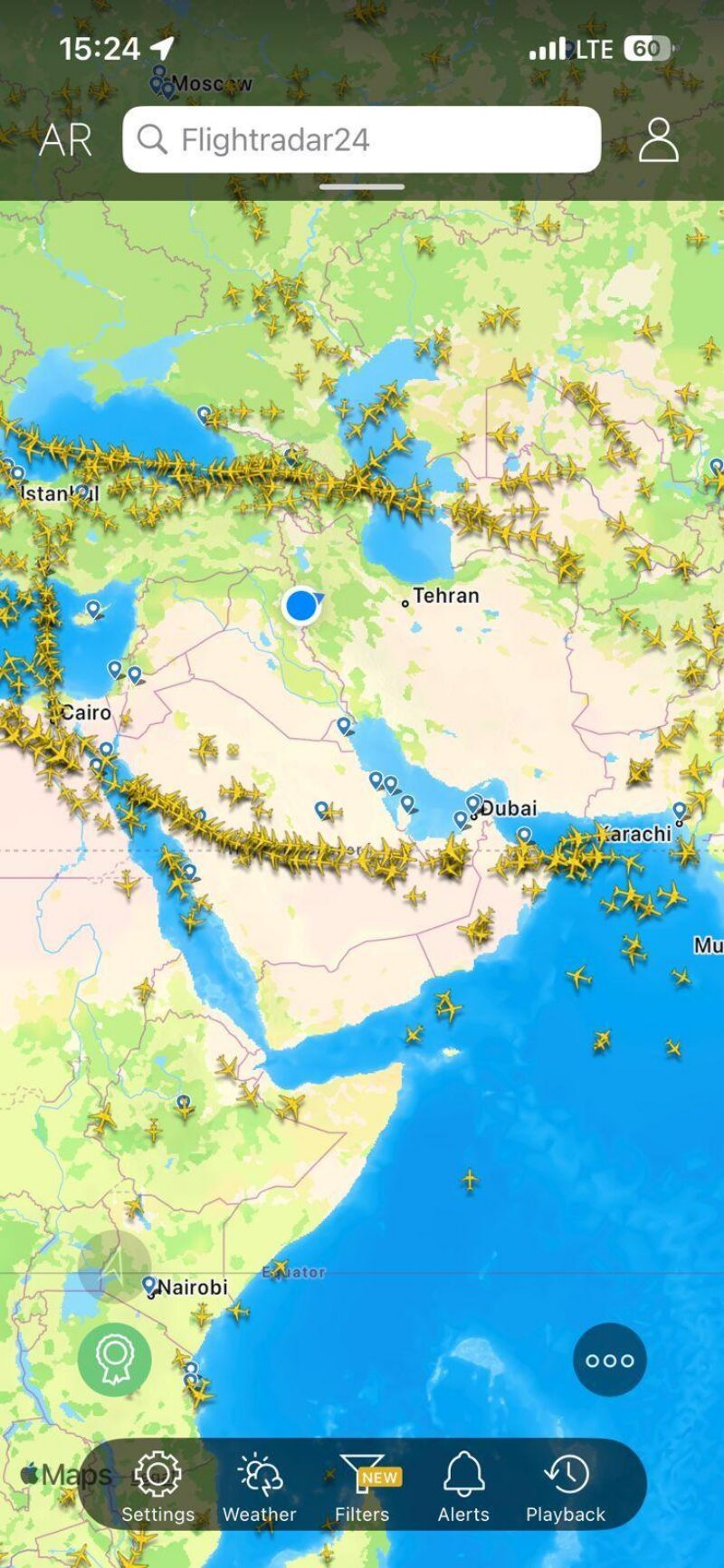
Flightradar24 tells the full story, everyone is flying around us, nobody through us. Apparently our airspace is the one place pilots unanimously agree to skip right now. Can't blame them honestly! - Balen, 30th March
29th March
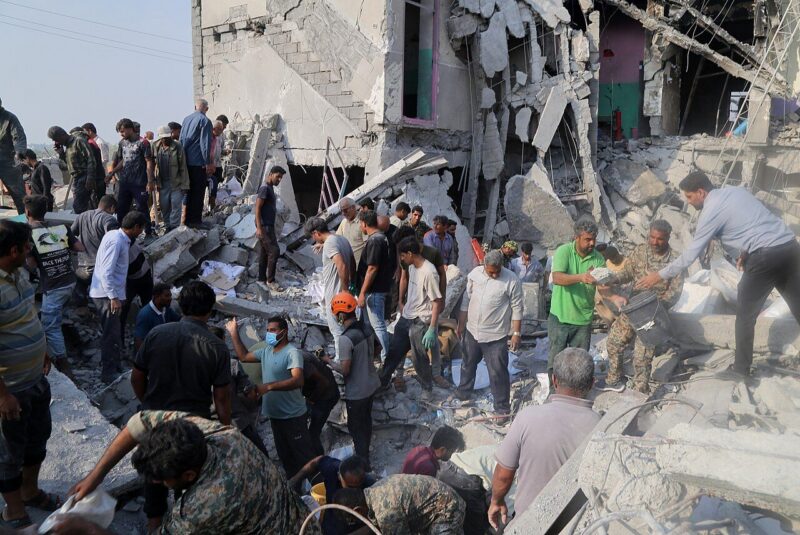
Wanted to share a quick summary of what’s been happening in the Kurdistan Region since the war started. Despite staying completely neutral, the KRG has faced hundreds of Iranian-backed attacks, with lives lost and homes targeted, including the residences of Kurdish leaders themselves.
Worth a read 👇
When the United States and Israel launched military strikes against Iran on 28 February 2026, the Kurdistan Region of Iraq (KRI) found itself under assault despite having no part in starting the conflict.
From the very first day, the Kurdistan Regional Government (KRG) adopted a firm and consistent position of neutrality. KRG President Nechirvan Barzani declared that the region would not be part of the war, calling for diplomatic de-escalation and telling Iranian Foreign Minister Abbas Araghchi directly that the Kurdistan Region “will not be part of conflicts.” Prime Minister Masrour Barzani echoed this stance, urging all sides to resolve disputes through dialogue rather than weapons.
Despite this balanced position, Iran and its affiliated armed groups made the Kurdistan Region a repeated target. According to Rudaw and Kurdistan24, Iranian-backed militias carried out more than 450 drone and missile attacks on the region in the first weeks of the war alone, striking military bases, gas fields, infrastructure, and residential areas across Erbil, Duhok, and Sulaymaniyah provinces.
The human cost has been devastating. At least 14 people were killed and more than 85 others were wounded. Among the deadliest incidents, six Peshmerga fighters were killed and over 20 others were wounded on 24 March when Iranian missiles struck a Peshmerga base north of Erbil. An airport security guard was also killed in a drone attack on Erbil International Airport in early March. On 28 March, Iranian-backed militias struck the private residence of KRG President Nechirvan Barzani in Duhok, drawing international condemnation. The United States called it a “despicable terrorist act,” and air defenses also intercepted a drone targeting the Erbil residence of KDP leader Masoud Barzani on the same night.
Kurdish leaders responded with clear and firm language. KDP leader President Masoud Barzani condemned the attack on the Peshmerga as an “unjustifiable hostile act,” stating: “I condemn in the strongest possible terms this attack.” He described the Peshmerga as “the most cherished and valuable national asset” of the Kurdish people. On 8 March, following the Erbil airport attack, Barzani attended the funeral of the killed security guard and stated publicly: “From the beginning, we have tried to keep Kurdistan away from this war and hardship,” warning that “restraint has its limits” and that “the Peshmerga have never accepted oppression or coercion from any party.” On Saturday 28 March, responding to the attack on President Nechirvan Barzani’s residence, he issued his sharpest warning yet: “This is not about a house or a personal residence. Every part of Kurdistan and every home in Kurdistan is of value to us. Such attacks are a clear act of warmongering, a grave injustice, aggression, and wrongdoing against the Kurdistan Region, and they require a serious and decisive solution.”
The Kurdistan Region’s experience in this conflict stands as a painful example of a civilian population punished for its geography, not its choices. Its leaders have consistently chosen the path of peace, yet they continue to pay a price that was never theirs to bear.
Sources: Rudaw Media Network, Kurdistan24, CNN, Kurd Online, Times of Israel, US Department of State
18th March (member in a border region in Iraq):
I’m currently in Halabja, in the Kurdistan Region in the north of Iraq, near the Iranian border. There has been an attack here and, although I’m not certain, people are saying it may have been by US or Israeli forces targeting Iranian positions.
At the same time, in Sulaymaniyah, about 80 km from me, Iran has struck the airport and other locations. Across Iraq, things are escalating, with reports of strikes in Baghdad and attacks towards the US Embassy.
Honestly, it feels like chaos. No one really knows who is attacking whom, and the situation is very unstable and unpredictable.
7th March
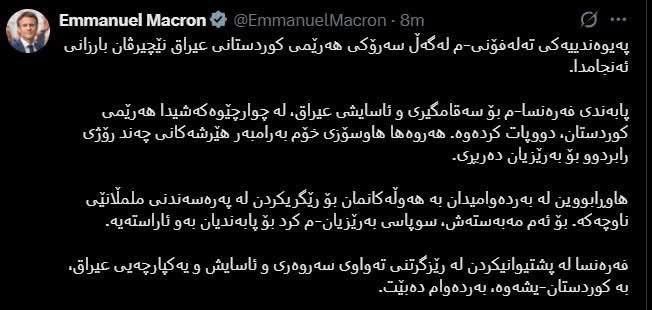
I noticed that Emmanuel Macron shared a post on X in Kurdish saying that he spoke with Nechirvan Barzani, President of the Kurdistan Region, about the current regional tensions and the importance of maintaining stability in Iraq and the Kurdistan Region. This is exactly the kind of engagement I hope to see from British politicians at this moment. The Kurdistan Region remains a safe and stable partner, and as Kurds our objectives are very much aligned with those of the UK government in promoting stability, dialogue, and regional security
2nd March
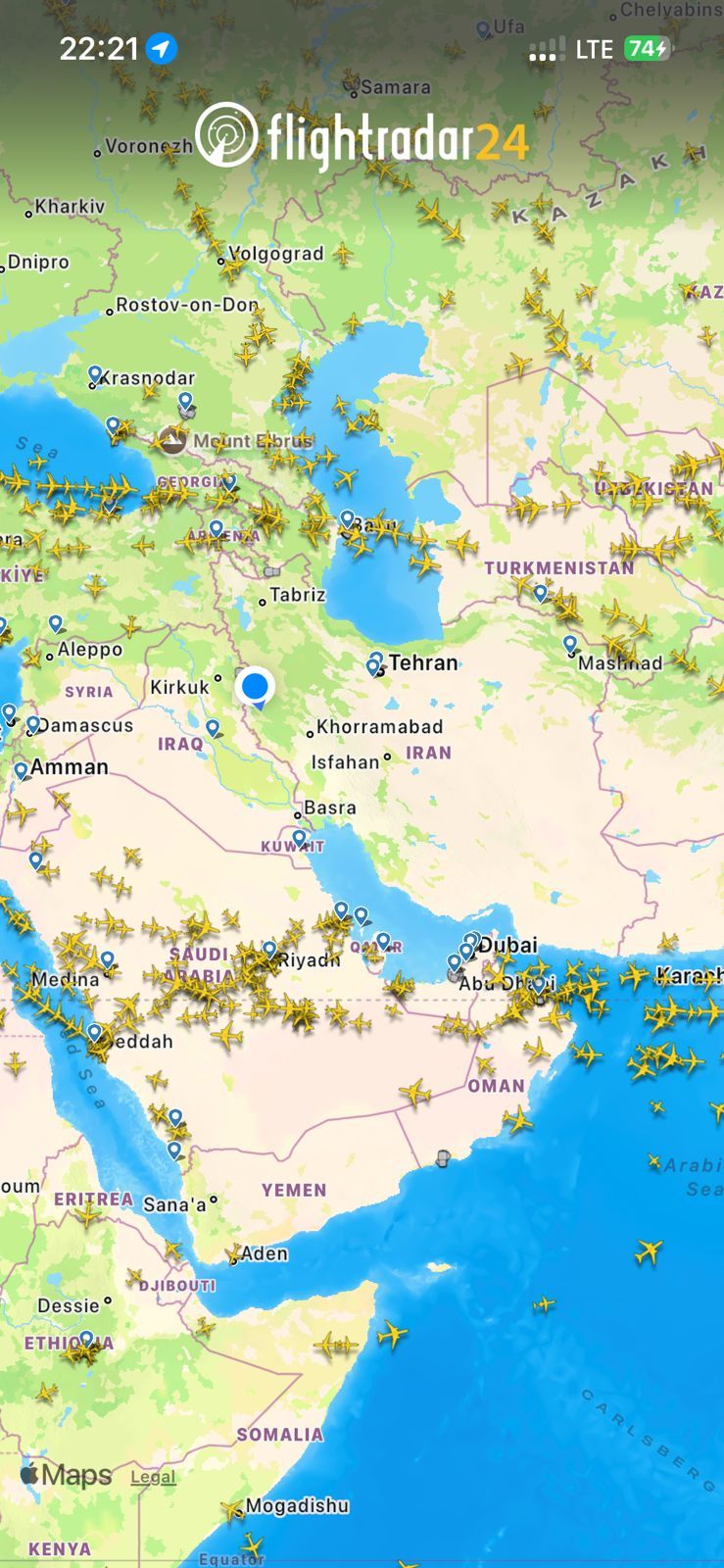
No flights are operating because of the ongoing war and military activity in this region.
28th February
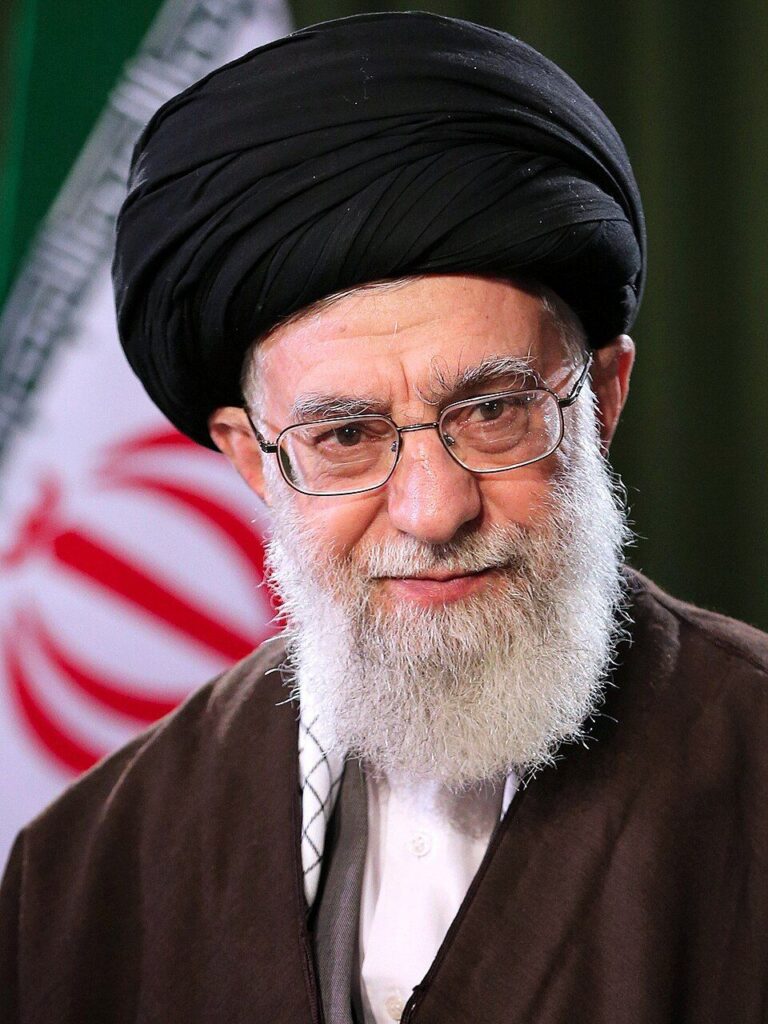
Khamenei's body has been found and he is confirmed dead, Israeli official says. This is a new chapter of middle east. (Image is licensed under the Creative Commons Attribution 4.0 International license. Attribution: Khamenei.ir)